How To Choose The Right Foundation For Your Skin Tone
Finding the right foundation for my skin tone often feels overwhelming since there are so many shades, formulas, and textures to consider on today’s market. The search can become even trickier if I don’t know what undertones I have or how each formula might interact with my skin type as the day goes by. Wearing the wrong foundation shade tends to make my skin look dull, mismatched, or unnatural both in photos and real life. Still, when I get it right, my face looks even, my confidence grows, and applying makeup feels effortless. This guide covers what I’ve learned about choosing a foundation that truly fits and brings out my natural skin tone.
Whether I’m shopping for drugstore brands or checking out higher end options, following a step-by-step game plan really helps me avoid those classic makeup blunders and saves me time. I’m sharing what to look for, how to test products, and which questions to check in about before making a decision. By sticking to these steps, anyone can stumble upon a foundation that blends seamlessly, lasts all day, and makes their natural beauty shine.
Step 1: Figure Out Your Skin’s Undertone
Knowing my skin’s undertone has made a big difference in finding foundation shades that look natural. Undertone doesn’t change with the seasons; it’s right beneath the surface color of my skin. It differs from my overall skin shade, which can switch up if I tan in the summer or spend less time outdoors in the winter.
How I Check for My Undertone:
- Look at My Veins: On my inner wrist, blue or purple veins usually point to cool undertones. Greenish veins are a sign of a warm undertone. If I can’t tell, I’m probably neutral.
- Jewelry Test: If silver looks better on me, I’m probably cooltoned. Gold usually flatters warm undertones. If both work, I could be neutral.
- Reaction to Sun: If I burn quickly, I probably have cool undertones. Tanning easily usually points to warm or neutral undertones.
Main Undertone Categories:
- Cool: Pink, red, or bluish tones.
- Warm: Yellow, golden, or peachy tones.
- Neutral: A blend of warm and cool or an olive base.
Once I get the undertone down, I focus on foundations labeled for that specific group. That way, the shade blends into my natural skin, rather than looking ashy or out of place.
Step 2: Choose a Formula Based on Your Skin Type
Different foundation formulas work better for different skin types, and my own experiments with liquid, powder, stick, or mousse foundations showed not every type is right for me. Here’s how I break it down:
Foundation Types & Skin Type Match:
- Oily Skin: I stick to mattifying or oilfree liquid formulas, powder compacts, or mousse textures. These help curb shine and keep makeup in place longer.
- Dry Skin: Hydrating liquids, dewyfinish creams, or tinted moisturizers are my favorites. They keep flaky spots at bay.
- Combination Skin: I look for products that balance oil in my Tzone but don’t grab onto dry areas. Medium coverage liquid foundations usually work well.
- Normal Skin: Most formulas are fine, so I focus on my preferred finish and color.
Coverage Level:
- Sheer/Tinted Moisturizer: Perfect for light, everyday coverage.
- Medium Coverage: Covers up redness or uneven tone, but still looks natural.
- Full Coverage: My pick for big events or when I want a completely flawless finish.
I tend to change up my formula or finish based on the season. I’ll pick more hydrating options during winter and stick to mattifying choices in summer’s humidity.
Step 3: Find the Closest Shade Match
Shade matching can be trickier than it looks—I’ve learned to always try on a few shades in natural light rather than relying on store lighting.
Step-by-Step Shade Matching:
- I swipe foundation along my jawline for the best match, not just my hand or wrist.
- I test two or three shades side by side and notice which seems to melt into my skin with little effort.
- Natural daylight is a must, so I’ll head outside if I can and make sure the match looks right on both my face and neck.
- If I’m stuck between two options, I usually lean toward the lighter one. It’s easier to give a boost with bronzer or mix in a touch of darker foundation than to fix a shade that’s too dark.
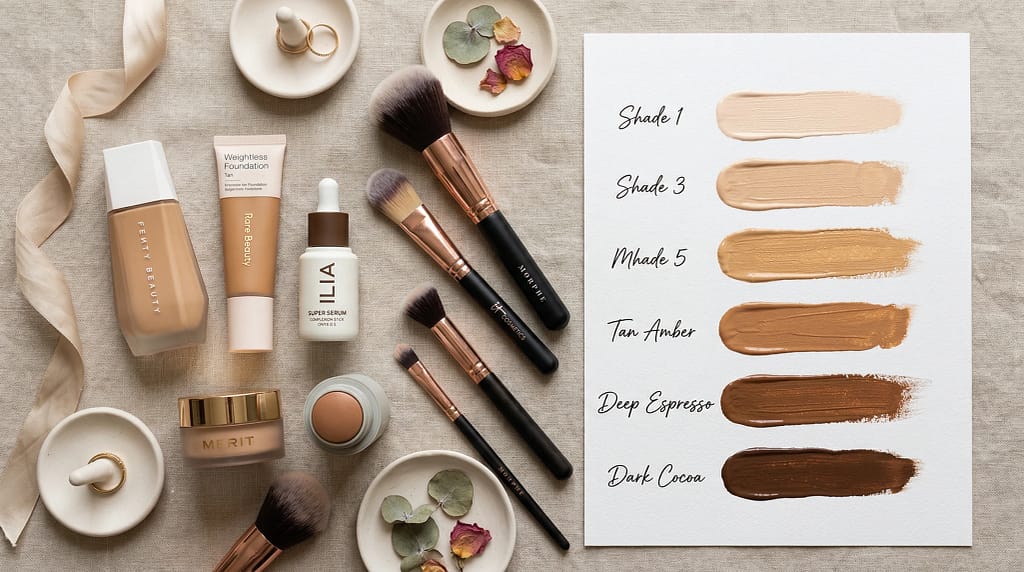
Foundations with Wider Shade Ranges:
Certain brands offer super inclusive shade ranges, which can be a lifesaver if I have olive or deeper skin tones that are tough to match. I’m always on the lookout for these brands when shopping.
Step 4: Test Before Buying
If possible, I like to get a sample or try out a small amount before making a commitment. Some foundations change color as the day goes on or react with my skin’s oils, which makes them look different after a few hours.
Tips When Testing Foundation:
- I wear foundation for at least three or four hours and pay attention to how it changes in texture or color.
- It’s important to check it in various lighting—daylight, artificial light, and at night. This helps prevent surprises during photos or special events.
- If I have sensitive skin, I watch closely for any reactions or itchiness.
Step 5: Think About Your Desired Finish
Some days, I want a matte look for a polished vibe, but other times I’m all about a dewy finish that makes my skin look extra fresh and hydrated. Picking a finish ahead of time simplifies the shopping process.
Main Foundation Finishes:
- Matte: Blots out shine and works great for oily or combination skin.
- Dewy: Gives skin a radiant, glowy look—awesome for dry or mature skin.
- Satin/Natural: Mimics real skin, landing somewhere between matte and dewy. This is my go-to for a balanced look.
Step 6: Test for Oxidation and Longevity
Oxidation refers to foundation getting darker or more orange after it’s been on your face for a bit. I’ve definitely been caught off guard by products that seemed perfect in the morning but looked off by the afternoon.
How I Test for Oxidation:
- I apply a swatch to my jawline and wait at least 1530 minutes.
- If it changes color, especially getting darker or orange, I’ll skip that formula.
I also keep an eye on how foundation wears through heat, humidity, or cold—some formulas really last while others melt away. Having a product that stands up to a long or active day is essential, especially if I have plans or work long shifts.
Step 7: Double-Check Ingredients If You Have Sensitive Skin
Since foundation sits on my skin all day, I always check the ingredients if I have allergies or am prone to breakouts. I steer clear of alcoholbased and heavily fragranced products because they can cause irritation. Look for oilfree and noncomedogenic formulas if skin tends to get bumpy or sensitive.
Common Questions & Extra Tips
What if my perfect match isn’t available?
When my shade isn’t in stock, I’ll mix two foundations or use color adjusters until it’s just right. Many stores will even help out with mixing to make a custom shade for me.
How do I make my foundation last?
- Using primer creates a super smooth base, and setting with translucent powder helps everything stay put.
- Setting sprays also give a boost, keeping makeup looking fresh even on hot or humid days.
Does skin prep matter?
It definitely does. Moisturizing before application makes foundation go on smoother and stops it from clinging to dry spots. Sunscreen is a must. If my face is dry or oily, I notice foundation just doesn’t look right, so prepping the skin is important.
Quick Recap & Action Steps
Picking the right foundation lifts my mood and streamlines my makeup routine. Here’s my go-to checklist:
- Spot my undertone and figure out my skin type before starting.
- Test shades in daylight for the truest color match.
- Pick a formula and finish that suits my daily needs and lifestyle.
- Look for oxidation or changing color with a proper wear test.
The next time I’m on the hunt, I’ll stick with these steps to find a foundation that looks and feels just right. Since foundation is personal, one person’s perfect pick may not work for someone else. Still, a bit of patience and curiosity lets anyone track down a shade that makes their natural beauty stand out.
Smart Shopper Guide GPT
Your dynamic, eco-conscious shopping assistant for personalized, sustainable choices.
Eyebrow Artistry advisor, a Friendly yet professional eyebrow makeup advisor
The Eybrow Artistry Advisor GPT assist you with eyebrow makeup, providing tips, techniques, and product recommendations in a friendly, casual, yet professional manner.
What can you expect?
- A focus on both product recommendations and techniques, offering balanced and personalized advice.
- An understanding of different face shapes, skin types, and personal styles.
- Asks for more details to provide the most tailored advice possible when unsure about your specific needs or preferences
- Personalized responses by using your name if provided, and include motivational phrases to encourage and support you in your makeup journey.
- Avoids giving medical or skincare advice and sticks to cosmetic guidance.
- Tailors responses to each individual’s makeup preferences and experience level.
Thank you for spreading the word!
Create your own website
And learn how to monetize it

Heads up! If you’re looking to join Wealthy Affiliate, make sure you sign up using my referral link to get access to my personal coaching and all WA features."