
How To Master The Art Of French Cooking At Home
Mastering French cooking at home sounds fancy, but it’s not just for pro chefs. With the right mindset, a handful of everyday tools, and a willingness to learn, you can whip up delicious French dishes right in your own kitchen. There’s something really rewarding about serving a homemade coq au vin, crusty baguette, or a silky crème brûlée—even if you’ve never been to Paris.
French cooking isn’t about complicated rules or expensive ingredients. It’s about using what you have and putting care into each step. Once you get the basics down, you’ll find French recipes popping up in your weeknight dinners and special occasions. With each dish, you’ll also gain a deeper appreciation for balance, patience, and how simple flavor layers can lead to amazing results.
In this guide, I’ll break down how you can start mastering French cooking at home. I’ll go through simple steps, share tips for getting the flavor just right, and clear up the biggest questions home cooks usually face. Whether you’re looking to impress your friends or just enjoy a cozy homemade meal, these pointers are for you. The world of French cuisine is exciting and full of variety, so let’s get into the heart of home French cooking together.
Step 1: Build Your French Pantry & Tools
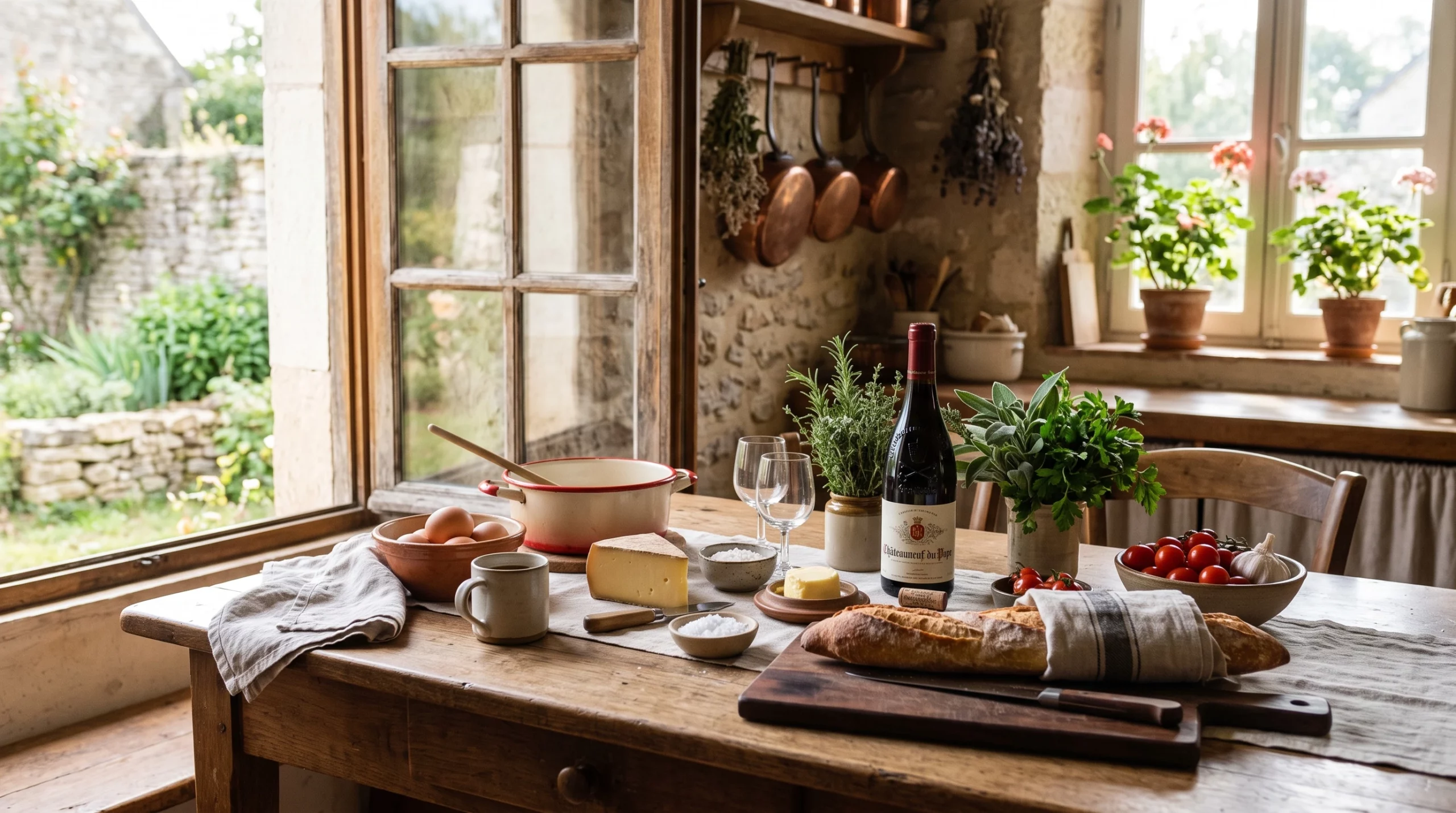
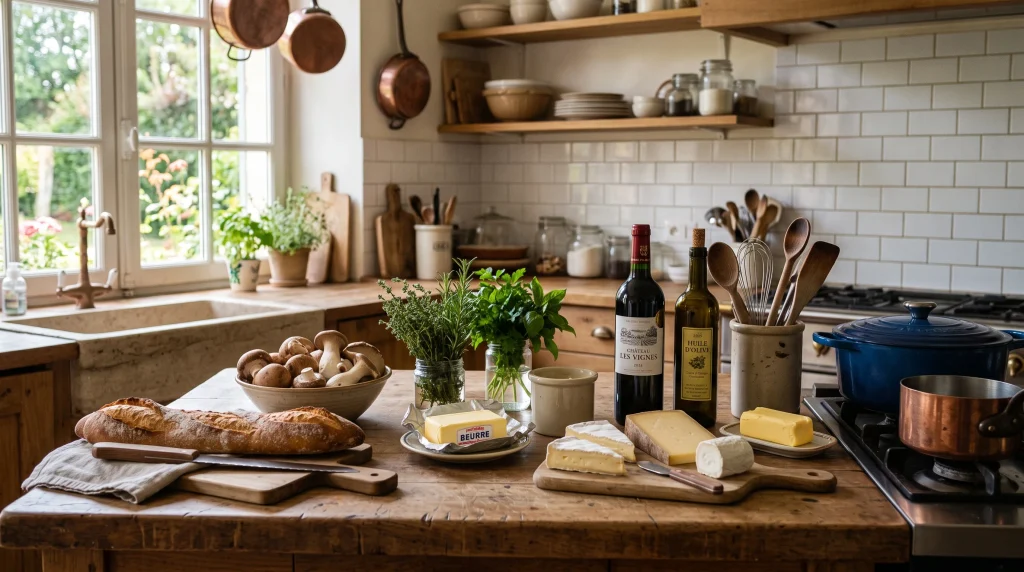
Having a decent foundation of ingredients and tools makes French cooking at home way easier. You don’t need to splurge on everything at once; just a few basics can really help.
Key Ingredients for French Cooking:
- Butter – plenty of it (unsalted preferred)
- Olive oil
- Fresh herbs – parsley, thyme, tarragon, chives
- Shallots and garlic
- Good quality stocks or broths (chicken, beef, or vegetable)
- Mushrooms, leeks, and onions
- Cheeses – Gruyère, Emmental, or brie
- Dry white and red wine for cooking
- Dijon mustard
- Fresh bread and eggs
As you make more recipes, you might stumble upon new ingredients like capers, cornichons, or crème fraîche, all of which pop up in traditional French cuisine. These extras can give a boost to both flavor and authenticity, but the basics above will cover most beginner dishes.
Helpful Kitchen Tools for French Recipes:
- Heavybottomed pot or Dutch oven (perfect for stews and soups)
- Ovensafe skillet
- Whisk
- Fine strainer or chinois
- Baking sheet (for baguette and pastry projects!)
- Mandoline slicer or sharp knife
- Mixing bowls of different sizes
Start with these and add more as you try different French dishes. If you’re really bitten by the French cooking bug, you can check out a sturdy cocotte, copper pots, or a baguette pan as your confidence grows. But for now, even basic gear will make the process smooth and rewarding.
Nail the Basic Techniques
French cooking has a few techniques that show up over and over. These aren’t hard, but understanding them takes your cooking from “meh” to “wow.”
Classic Techniques to Practice:
- Sautéing: Cooking food quickly in a bit of fat over mediumhigh heat. Think tender chicken breasts or buttery mushrooms.
- Deglazing: Pouring wine, stock, or even water into a hot pan to loosen the flavorful bits stuck to the bottom. It’s how you create those delicious French pan sauces.
- Roux: Mixing equal parts butter and flour, cooking it together before adding milk or stock to create creamy sauces like béchamel or velouté.
- Braising: Slowly cooking meats or veggies in a little bit of liquid, usually with aromatics. Coq au vin and beef bourguignon use this method.
- Making vinaigrette: French salads are all about simple, homemade dressings using oil and vinegar or lemon juice, whisked until creamy.
Try each technique on its own with simple dishes. Once you’re comfortable, you can mix and match for more complex recipes. You might find yourself layering sautéed veggies into a braised dish or using a homemade roux as the base for comforting cheese sauces. Repeating these basics is the key to building skill and intuition in the kitchen.
Start Easy. Classic French Dishes for Beginners
Not sure where to begin? French food doesn’t have to be tricky or use wild ingredients. Some classics are super approachable and taste amazing when made at home.
Great Starter Recipes:
- Omelette: A fluffy, justset egg omelette is ready in minutes. Multitask with herbs, cheese, or leftover veggies.
- French Onion Soup: Conquers both technique (sauté, deglaze, broil) and comfort food cravings.
- Ratatouille: A veggie dish that uses whatever’s in season. Tomatoes, zucchini, and eggplant stewed with olive oil and herbs.
- Salade Niçoise: Tuna, potatoes, green beans, and eggs, all dressed in a garlicky vinaigrette. No cooking degree required.
- Crêpes: Thin pancakes you can fill with just about anything: jam, chocolate, ham, or cheese.
Tackling just one or two dishes a week builds your confidence and your skills. If you want to mix in some variety to your menu, try rotating in a French dessert, like classic chocolate mousse or a fruit tart. Pretty soon, you’ll want to try more challenging classics like coq au vin, cassoulet, or tarte Tatin.
Taste as You Go, and Adjust
Checking the flavor at different steps is really important in French cooking. Recipes are great guides, but your taste buds are the final judge. If a sauce feels bland, add a pinch of salt, some herbs, or a splash of lemon. If something is too rich, mix in a bit of acidity (like white wine or vinegar) to balance it out.
- Keep a small spoon nearby for tasting.
- Fresh herbs and a squeeze of citrus can save many dishes.
- Don’t be afraid to tweak or make a note if you try a recipe again; everyone’s kitchen is a little different.
Paying attention to seasoning (salt, pepper, acid) often separates good homecooked meals from those nextlevel cool bistro plates. Practice makes it second nature, so taste often!
Stay Organized. Mise en Place Makes a Difference
French chefs use the term “mise en place,” which basically means getting everything ready before you start cooking. This simple step keeps things smooth. Wash, chop, and measure everything in advance. That way, you’re not scrambling for the garlic when your onions are burning in the pan.
- Set out ingredients in small bowls or on a tray.
- Prep all veggies, herbs, and proteins before turning on the stove.
- Keep your workspace tidy to avoid lastminute surprises.
This habit is also useful for baking—having everything ready makes the process way less stressful, especially if you’re trying a recipe for the first time.
Common Questions & Troubleshooting
What if I can’t find fancy French ingredients?
Use the best local ingredients you can get your hands on, and don’t stress about authenticity. French cooking in real French kitchens often uses what’s in season or on sale. Sub in regular mushrooms for morels, mozzarella for Gruyère, or green beans for haricots verts. Reliable substitutions will help you keep things practical and affordable.
How do I get that perfect French sauce?
Patience is really important. Cook at the right temperature, whisk slowly, and taste, taste, taste. If your sauce breaks (looks oily), remove it from heat and whisk in a bit of cold water or butter to pull it back together.
I burned my onions, now what?
- Start over if they’re bitter and blackened; no shame, it happens!
- If only a few bits are burned, remove them and keep going. Deglazing with a splash of liquid helps loosen any stuck pieces.
- Use a timer as a reminder for slowcooked recipes, especially when multitasking.
Every cook has kitchen mishaps. Use these moments as learning experiences, and before long, you’ll spot and fix issues before they throw off a dish. Keeping an eye out for little details, like changing color and smell, will set you up for success.
Keep Practice and Enjoy the Magic
French cooking at home is an adventure, not a race. Some recipes will give you trouble. Others will come out amazing on the first try. Keep practicing, keep tasting, and don’t be afraid to invite friends or family over for a little taste test. Cooking is a way to enjoy, connect, and relax. Your version of a French classic may become someone’s new favorite. If you keep at it, you’ll start making changes confidently and maybe even inspiring others to start their own homecooked French meals.
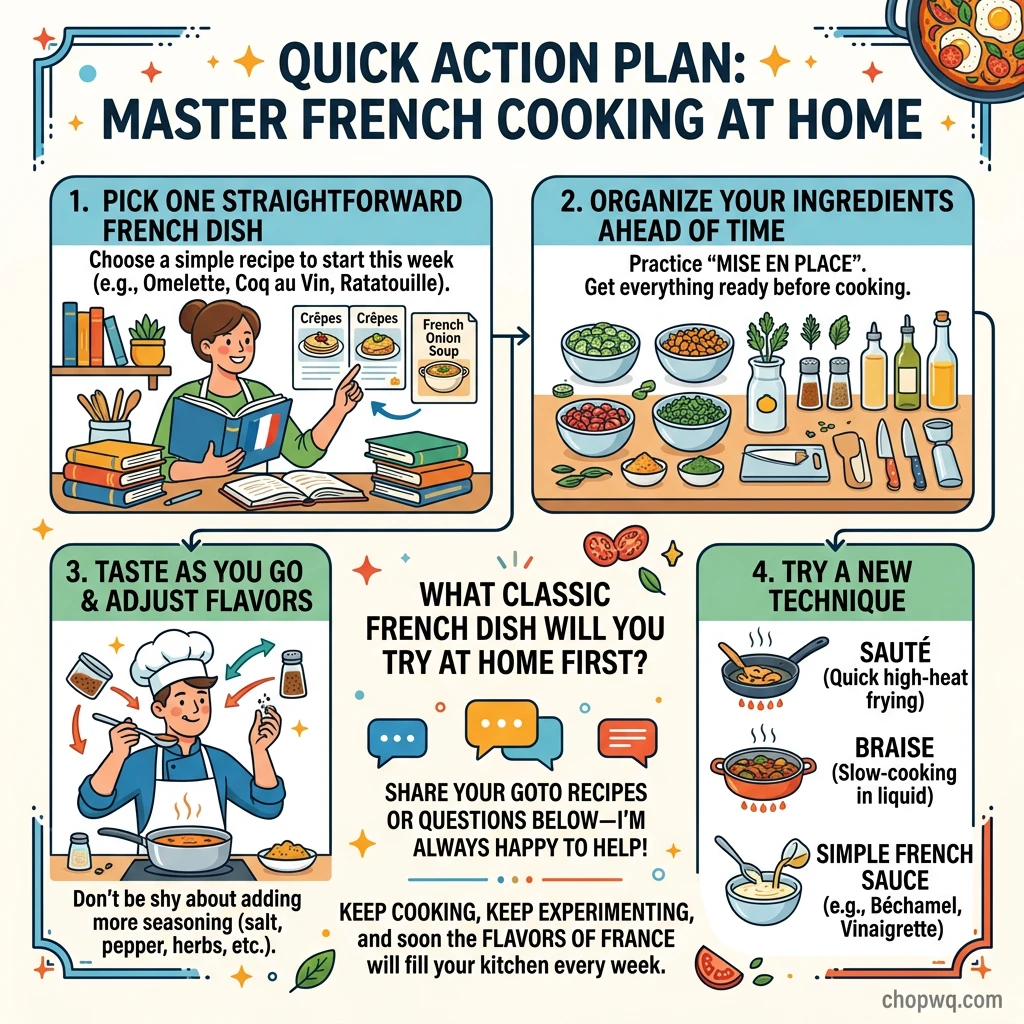
Quick Action Plan:
- Pick one straightforward French dish to try this week.
- Organize your ingredients ahead of time; mise en place style.
- Taste as you go, and don’t be shy about adjusting flavors.
- Try a new technique: sauté, braise, or create a simple French sauce.
What classic French dish will you try at home first?
Share your goto recipes or questions below—I’m always happy to help! Keep cooking, keep experimenting, and soon the flavors of France will fill your kitchen every week.