


How to Tell If an Online Home Decor Boutique Is Actually Legit
How to find reliable online home decor boutiques
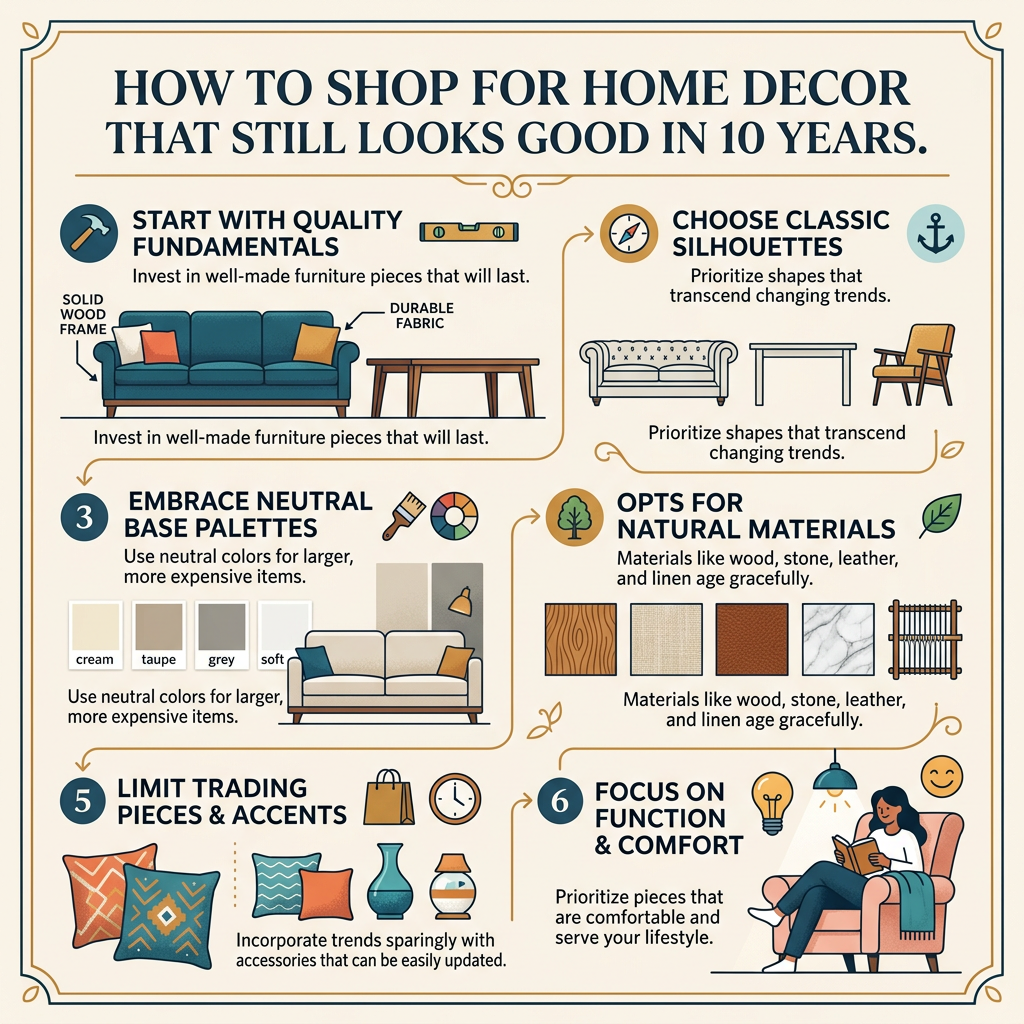
This happens constantly in home decor, maybe more than in any other shopping category. The aesthetic is the whole business model for a lot of sketchy storefronts, because a pretty grid of throw pillows is cheap to fake and expensive to verify. The good news is that vetting a seller takes a few minutes if you know what to check, and none of it requires reading fine print like a lawyer. This is strictly about sizing up the store itself. If you want help judging whether the actual piece you’re eyeing will hold up in your home, that’s a separate skill covered in how to choose home decor that lasts.
The five-second scan that weeds out half the sketchy sites
Before you read a single product description, look at the bones of the site. Scroll to the footer. A real boutique has a physical address or at least a real business name, a working contact page, and links to policies that actually lead somewhere instead of a 404 page.
Check how long the domain has existed using a free WHOIS lookup. A site registered two months ago selling “handcrafted heirloom ceramics since 1998” is telling you something. It doesn’t mean the store is a scam, new shops open every day, but it means you treat every other claim on the page with a little more skepticism.
Look at the photography too. If every single product shot has the same white studio background and the same model lighting across wildly different items, that’s often a sign the images were pulled from a supplier catalog rather than shot by the actual seller. Real small boutiques tend to have a mix: some polished shots, some that look like they were taken in an actual living room with actual shadows.
Read reviews like a detective, not a fan
Reviews are the single most manipulated piece of information on any shopping site, so read them the way a detective reads a statement, not the way a fan reads a testimonial.
Start with the pattern, not the content. A product with 400 reviews and a 4.9 average, all posted within the same six-week window, did not earn that organically. Real review histories are lumpy. They spike after a sale, trickle in otherwise, and include a handful of three-star reviews that say something boring and specific like “nice color but smaller than expected.”
Then check where the reviews live. Reviews hosted entirely on the seller’s own site, with no option to verify through a third party, are easy to curate. Cross-reference the brand name on Trustpilot, Reddit, or even just a general search with the word “reviews” or “scam” after it. If a boutique has thousands of Instagram followers and zero footprint anywhere else, that gap is worth noticing.
Photos from actual buyers matter more than star counts. A listing with customer-submitted photos showing the item in a real room, on a real shelf, with real dust and clutter around it, tells you more than fifty five-star reviews with no images at all.
What a real return and shipping policy actually looks like
A legitimate boutique’s return policy reads like it was written by someone who has actually processed a return. It names a specific window, usually somewhere between 14 and 30 days, states who pays for return shipping, and explains what happens to items that arrive damaged. Vague language like “contact us for returns” with no further detail is a soft no dressed up as a maybe.
Shipping timelines deserve the same scrutiny. A boutique selling “handmade” or “curated” pieces that quotes 2 to 5 business day delivery on everything is either sitting on a warehouse full of inventory or not being straight with you about where the item is actually coming from. Genuine small-batch and artisan sellers are usually upfront that production or shipping takes a few weeks, because that’s the honest tradeoff for something made in small runs.
Also check whether the policy mentions a restocking fee buried several lines down, or whether “free returns” only applies to store credit rather than an actual refund. Those details are where a policy quietly protects the seller at your expense.
Test customer service before you spend a dime
You don’t need to buy anything to find out whether a boutique’s customer service is real. Send a question before you ever add something to cart. Ask about material, dimensions, or restock timing, something a chatbot can’t fully fake and a real small team would want to answer well.
Pay attention to how long the response takes and who’s actually writing it. A reply within a day or two, written in a voice that sounds like a person and addresses your specific question, is a good sign. A copy-pasted response that ignores half of what you asked, or no response at all after several days, tells you what to expect if something goes wrong with an actual order.
It’s also worth checking whether the contact page offers more than just a form. A real phone number or a live chat that connects to an actual human during business hours adds a layer of accountability that an email-only setup doesn’t.
Red flags on product pages that scream drop shipper
Some tells show up right on the product page, if you know where to look. Product titles stuffed with unrelated keywords, like “Modern Nordic Ceramic Vase Home Decor Living Room Office Gift Minimalist,” are a classic drop shipping pattern. A boutique that actually designed or sourced the item usually names it something simpler, because they’re not trying to catch every possible search term at once.
Watch pricing that ends in odd numbers like $24.97 across completely unrelated categories, furniture, candles, wall art, all priced in that same pattern. That pricing structure often comes from the same supplier platform, not from a seller who set prices based on their own costs.
Check the “details” or “specifications” section for actual material information. “High-quality material” with no further description is a red flag. A seller who sourced or made the piece themselves can usually tell you exactly what it’s made of, down to the type of wood or the gauge of metal.
Finally, look at how many variants a single listing offers. A boutique selling the “same” ceramic vase in thirty colors and twelve sizes, with suspiciously identical photography across every option, is usually pulling from a bulk supplier catalog rather than a curated collection.
Payment security and the checkout details people skip
Checkout is where people get careless because they’re excited about the purchase, which is exactly when it’s worth slowing down for thirty seconds.
Confirm the URL shows a padlock icon and starts with https, not just http. Check that the payment page accepts recognizable processors like PayPal, Stripe-powered checkout, or major card networks directly, rather than routing you to an unfamiliar third-party page with a name that doesn’t match the store.
Be cautious of any site that asks you to pay exclusively through a bank wire transfer or an untraceable payment method for a retail purchase. Legitimate boutiques, even very small ones, use standard e-commerce payment processors because those processors require sellers to meet certain verification standards to even get approved.
Also double check that the checkout page reflects the same brand name and contact details you saw in the footer. A mismatch, where you’re buying from “Willow & Oak Home” but the checkout processor lists a completely different business name, isn’t automatically a scam, but it’s worth a pause and maybe a quick search on that other name.
Build a shortlist of boutiques you can trust on repeat
Once a boutique passes this kind of check, it’s worth keeping track of it rather than starting the vetting process from scratch every time you want a new throw blanket. A simple bookmarks folder or a running note works fine for most people.
The sellers worth keeping on that list usually share a few traits: consistent product photography that looks like it came from the same hands, review histories that feel lumpy and real, responsive customer service, and policies that read like they were written for actual situations rather than copied from a template. Over time, a shortlist like that saves more time than re-vetting every new site that shows up in your feed.
If you’d rather not run this checklist manually every time you shop, that’s exactly the kind of repetitive, detail-heavy work a browser extension or GPT-powered shopping assistant from the Hub can take off your hands. The right one flags shady storefronts automatically, surfaces real third-party reviews before you check out, and gives you a trust read on a site in seconds instead of minutes. Worth trying the next time a too-good-to-be-true boutique shows up in your feed.