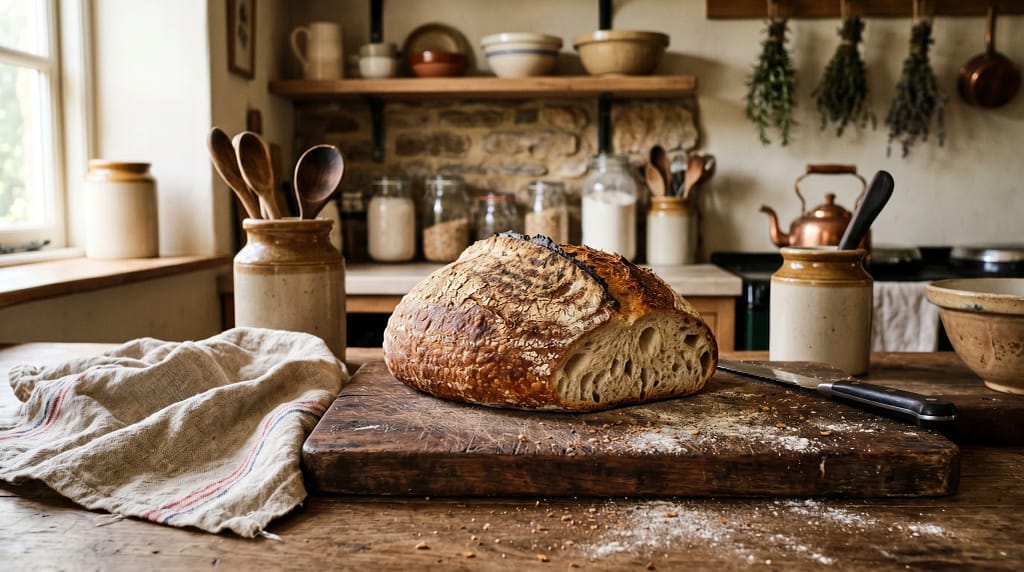
The Ultimate Guide To Baking The Perfect Sourdough Bread
There’s nothing like pulling a crusty, golden sourdough loaf from your oven and hearing that satisfying crackle as it cools. I used to think baking sourdough bread was only for expert bakers, but once I got the hang of it, I realized it’s pretty doable, even in a home kitchen.
Sourdough isn’t just bread with a tangy flavor. Baking it at home means you control every ingredient, and you end up with something way tastier (and usually healthier) than store-bought. It takes patience and some trial and error, but the reward is a homemade loaf you’ll be proud to share, or keep all to yourself.
This guide covers everything I learned on my own sourdough adventure: setting up your starter, kneading tips, getting that cool open crumb, how to troubleshoot common hiccups, and even fun ways to use your leftover starter. This is the roadmap I wish I’d had when I started—so let’s jump in together and learn everything you need for fresh, bubbly sourdough!
The Basics? What Makes Sourdough Bread Special?
Sourdough bread is all about fermentation. Instead of using commercial yeast, sourdough gets its rise from wild yeast and healthy bacteria that develop in your starter. This mix gives sourdough its signature flavor, chewy texture, and that thick crust everyone loves.
Why People Love Sourdough:
- It has a deep, mildly tangy flavor.
- Stays fresh longer than regular bread.
- Easier to digest for some people (thanks to the fermentation process).
- No weird additives or commercial yeast. All-natural goodness.
- It builds baking confidence and lets you try lots of dough shapes and flavors.
Once you get used to the process, sourdough is just as flexible as any other bread. Keep in mind it requires more time and TLC than basic sandwich loaves, but the results are so worth it. You’ll soon start finding your favorite flour combos, folding techniques, and even experiment with sweet or savory add-ins like olives, nuts, or cranberries.
Step 1: Set Up and Feed Your Sourdough Starter
The starter is the heart of sourdough baking. This bubbly, living mixture of flour and water is what lifts your dough and gives your bread a tangy kick. If you don’t already have a starter, making one from scratch takes about a week, but you only need flour, water, and a glass jar.
How to Make a Starter:
- Mix equal parts flour and water in a clean jar (about 50g each).
- Cover loosely and leave at room temperature.
- Every 24 hours, discard half and feed with fresh flour and water.
- After 5–7 days, your starter will bubble and smell slightly fruity.
I feed my starter every morning, but you can adjust based on how often you bake. Hungry starters are a common culprit for flat loaves, so keeping yours lively is super important. If you’re not baking as often, you can keep your starter in the fridge, then feed it a couple of times before the next bake.
Need some inspiration for your starter’s “discard”? Don’t toss it! You can put it to work in pancakes, waffles, crackers, or even pizza dough. This reduces food waste and gives you extra chances to bake something tasty.
Step 2: Gather Ingredients and Tools
What I love about sourdough is you don’t need fancy equipment. Here’s a list of stuff that makes things easier:
- Flour: Unbleached bread flour works great. Rye and whole wheat can boost flavor and fermentation power.
- Water: Filtered or tap, as long as it isn’t heavily chlorinated.
- Salt: Fine sea salt ensures even mixing.
- Big bowl: For mixing and bulk fermentation.
- Dutch oven or cast iron pot: Helps achieve that crispy crust.
- Bench scraper: Makes handling sticky dough easier.
- Banneton or bowl with a towel: For proofing the dough and getting a good rise.
- Kitchen scale: Useful for precise measuring (optional, but it helps).
If you’re just starting out, use what you have. The main thing is to work with a happy, active starter! Don’t get too caught up in buying gadgets at first. Focus on the basics—good flour, some patience, and your own two hands.
Step 3: Mix and Knead the Dough
Mixing sourdough dough is simple, but there are a few tricks that really help. Start by combining your flour, water, salt, and starter. Use your hands, a spoon, or a stand mixer, whatever works for you.
Tips for Better Dough:
- Let the dough rest (an “autolyse”) for 30–45 minutes after mixing flour and water. This lets the flour absorb water properly and relaxes the gluten.
- Add salt and starter after the autolyse for best results.
- Knead just until combined. Sourdough prefers gentle stretching and folding instead of heavy kneading.
- If your hands are sticking, wet them slightly for easier handling. This prevents too much flour from toughening your dough.
The dough is stickier than yeasted bread, but give it time and the gluten will develop. After mixing, I do a few rounds of stretch and fold every 30 minutes during the first two hours of fermentation. You’ll notice each round, the dough gets smoother and easier to handle.
If you want to try other breads too, the sourdough process adapts well to baguettes, sandwich loaves, or even fluffy dinner rolls. The keys are timing—and being willing to experiment if your dough looks different from others you see online!
Step 4: Bulk Fermentation and Shaping
During bulk fermentation, your dough sits in a bowl at room temperature, rising and developing flavor. This usually takes 4 to 6 hours, depending on kitchen temperature and the pep in your starter. Warmer kitchens go faster; cooler ones slow things down, which can add extra flavor.
How to Shape a Sourdough Loaf:
- When the dough has expanded and is a little jiggly, gently shape it into a round (boule) or oval (batard).
- Use a lightly floured surface and your bench scraper to help.
- Let it rest for 15–20 minutes, then tighten the shape by folding the sides toward the center. This builds tension for oven spring.
After shaping, transfer the dough to a floured proofing basket or a bowl lined with a floured tea towel. This helps keep your loaf from sticking and encourages a good rise in the oven. If you don’t have a banneton, a colander with a towel works too.
For something a bit different, try making mini rolls, sandwich buns, or focaccia. All these shapes work great with sourdough and let you mix things up in how you serve your bread.
Step 5: Proof and Bake
Let the shaped dough proof at room temperature for about 1–2 hours, or in the fridge overnight for better flavor! Cooler, longer proofing tends to bring out that iconic sourdough tang. Chilling overnight also lets you bake fresh bread in the morning with very little fuss.
Baking Tips:
- Preheat your oven to the highest temperature (450–500°F/230–260°C) with your Dutch oven inside for maximum crust development.
- Slash the loaf’s top with a sharp blade. This lets it expand in the oven and create beautiful patterns.
- Carefully place the loaf in the hot Dutch oven, cover, and bake for 20 minutes. Steam trapped inside helps create a shiny, crisp crust.
- Remove the lid and bake until you get a deep brown, crisp crust (15–25 more minutes).
Cool the bread before slicing so the crumb sets. It’s super tempting to cut in right away, but waiting gives you a fluffier texture, helps keep moisture inside, and makes slicing easier.
Troubleshooting and FAQs
Why is my bread dense or gummy?
This is usually from underfermentation, a weak starter, or slicing before it’s cooled. Try giving the dough more time, feeding your starter more frequently, or letting the loaf cool fully before slicing. If your kitchen is chilly, let your dough ferment longer or move it somewhere warmer like the oven with the light on.
My dough sticks, what can I do?
- Dust your work surface with flour or rice flour.
- Grease your bowl if proofing overnight.
- Use a bench scraper to help shape sticky dough.
- Practice makes perfect—the more dough you handle, the easier it gets.
How can I make my bread more sour?
Let your dough ferment longer and use more whole grain flour. A slower, cooler rise brings out extra tang. Also, use less starter and let it ferment overnight in the fridge for punchier flavor.
What if I forget to feed my starter?
Don’t worry! Starters are resilient. If yours gets neglected, just remove the layer of liquid (“hooch”) and feed it a couple of times at room temperature. It should bounce back and be baking-ready.
Final Tips for Sourdough Success
Sourdough takes time, but don’t stress about perfection! Every loaf teaches you something new, and small changes—like adjusting flour type, fermentation time, or baking temperature—make a big difference over time. Trust your senses and keep notes for future bakes.
Your Next Steps:
- Feed your starter regularly, even when you aren’t baking.
- Take notes after each bake to track what works (and what flops).
- Experiment with different flours and hydration levels to find your preferred loaf style.
- Join baking communities online to swap stories, tips, and troubleshooting advice.
Nothing beats a fresh, homemade loaf with butter, soup, or just a pinch of salt. Seriously, it’s one of my favorite kitchen projects, and each time you bake, it gets a little easier. Have fun and happy baking—share your proudest loaves or sourdough questions in the comments below. Keep exploring, experimenting, and baking boldly!
Reusable Produce Bags on Amazon
Seasonal Menu Wizard
The Seasonal Menu Wizard GP tailors menus to ingredient choices and cooking expertise.
Thank you for reading, comments and shares!
Create your own website
And learn how to monetize it

Heads up! If you’re looking to join Wealthy Affiliate, make sure you sign up using my referral link to get access to my personal coaching and all WA features."